How to Run Hierarchical Regression and Interpret R Square Change 2026

Hierarchical regression lets you enter predictors in blocks, then measure what each new block adds on top of everything already in the model. R … Read more

 Priya Nandakumar
Hierarchical regression lets you enter predictors in blocks, then measure what each new block adds on top of everything already in the model. R … Read more

Testing moderation means checking whether the link between your predictor and your outcome changes depending on a third variable. You do it by multiplying … Read more

The difference between z test and t test comes down to a single input: whether you know the population standard deviation. Use a z-test … Read more

To run a mixed ANOVA with between and within factors, you enter every repeated measure as its own column, then open Analyze > General … Read more

Cramer’s V measures how strongly two categorical variables are associated, on a scale from 0 to 1, using the chi-square statistic from a contingency … Read more

A one-sample t-test asks one simple question: is the mean of my sample meaningfully different from a value I already know? To learn how … Read more

Short answer to when to use ANCOVA instead of ANOVA: use it when a continuous covariate, usually a pre-test or baseline score, explains part … Read more

Both tests are post hoc follow-ups to a significant ANOVA, and this guide to tukey vs bonferroni post hoc tests explained for ANOVA covers … Read more

To apply a Bonferroni correction, divide your original significance level by the number of tests you ran, then judge every p-value against that stricter … Read more
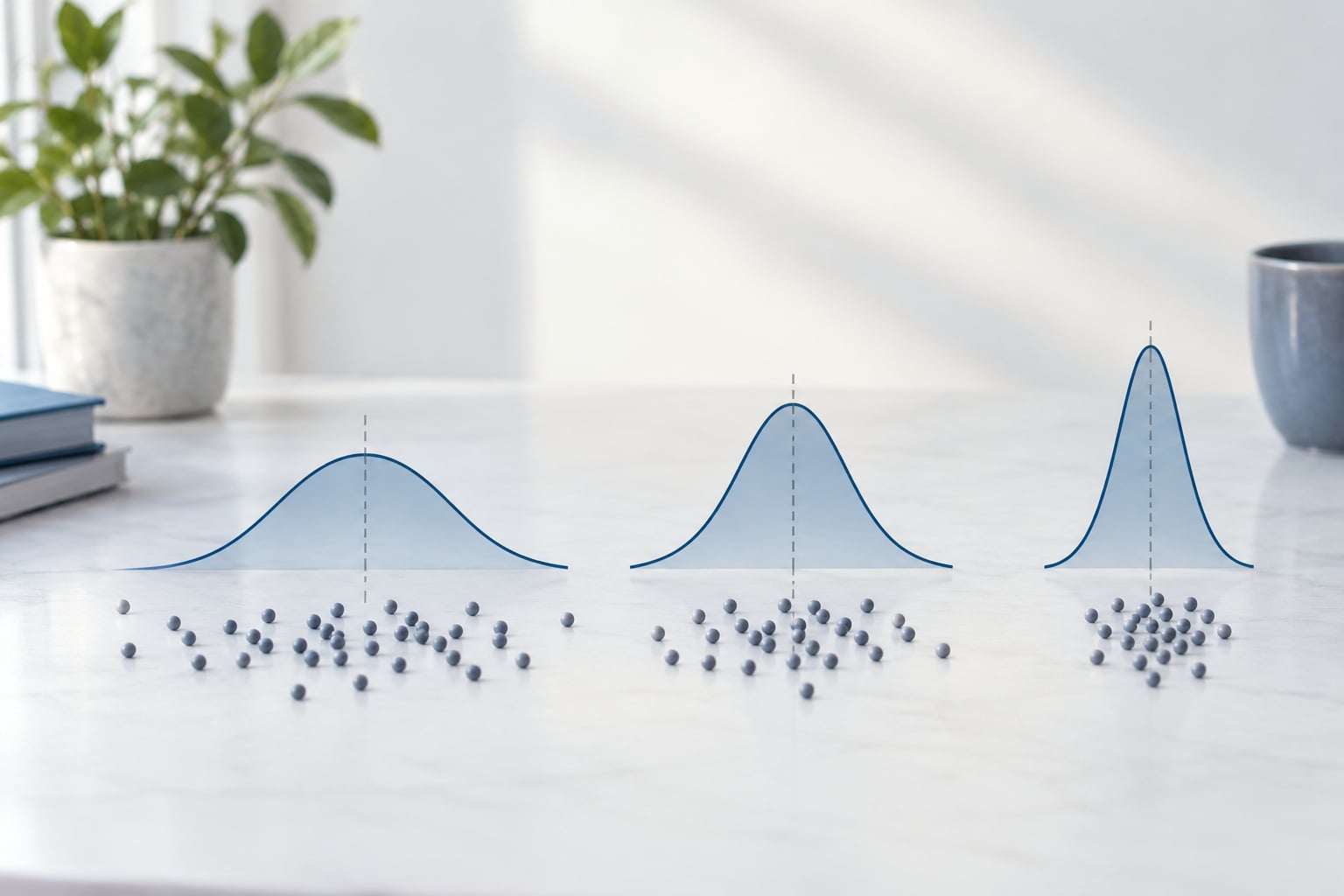
The central limit theorem says that, under suitable conditions, the distribution of a sample mean or proportion becomes approximately normal as the number of … Read more
Practical guides to statistics, surveys and research data
Read the latest guides