How to Measure Variables: Nominal, Ordinal, Interval, Ratio 2026

You classify a variable by asking one question: what do its values genuinely support? If you can only name the values, the scale is … Read more

You classify a variable by asking one question: what do its values genuinely support? If you can only name the values, the scale is … Read more
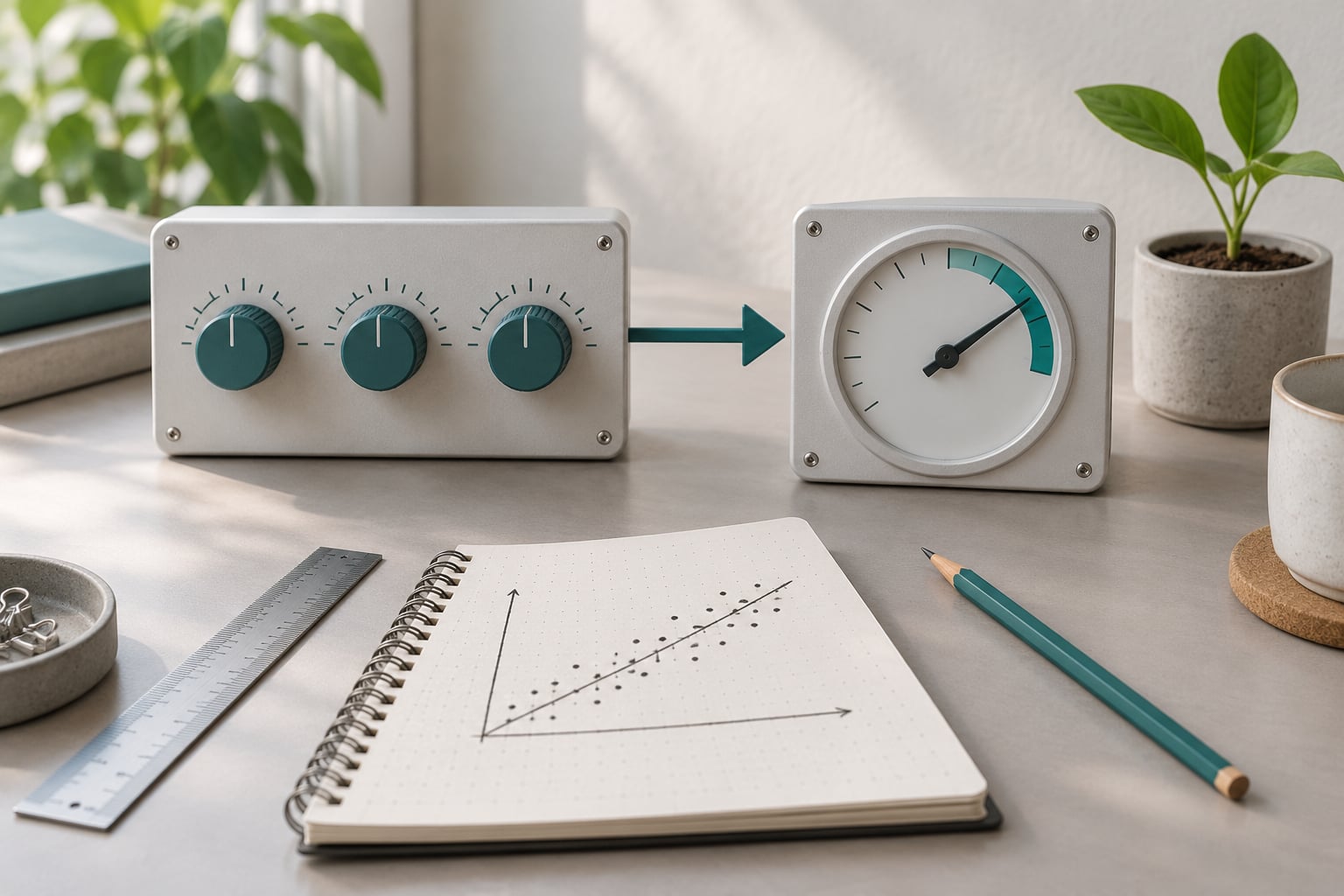
The difference between independent and dependent variables comes down to direction. An independent variable is the factor a researcher deliberately changes or sets, and … Read more

What are control variables and how to choose them? Control variables are the factors a researcher holds constant, or adjusts for statistically, so they … Read more

A research question is an open, interrogative statement of what a study sets out to find out. A hypothesis is a declarative, testable prediction … Read more

Learning how to write research objectives and hypotheses comes down to one chain of logic: state the problem, say what you will do about … Read more

To describe your study population and sampling frame, you need four things in writing: the group your study is about, the criteria that decide … Read more
The short answer: document every design decision in enough detail that another researcher could repeat your study from your chapter alone. A quantitative methodology … Read more

Probability sampling uses random selection, so every member of the population has a known, non-zero chance of being chosen. Non-probability sampling uses non-random selection, … Read more
You determine the sample size for a regression by running an a priori power analysis before you collect any data, entering four quantities: the … Read more

Statistical power is the probability that a test correctly rejects a false null hypothesis, so how to run a power analysis before collecting data … Read more
Practical guides to statistics, surveys and research data
Read the latest guides